Taupō and the Perils of Unexpected Mountain Biking

Huka Falls near Taupō

The city of Taupō offers a range of adventure options and natural marvels, including the sparkling silver caldera of Lake Taupō, a volcano that looks exactly like Mount Doom, bungy jumping opportunities, and the Huka Falls. As I am not psychologically prepared for anything requiring physical courage, skipping the bungy jumping was a foregone conclusion. Sadly, I didn’t realise that going to the Huka Falls might also involve a modicum of danger.

Bungy Jumping at Taupō

Once again, the creaking hinges of our aging bodies came into play in our decision-making. I suggested walking to the Falls (a mere four kilometres one-way along the dedicated walking track), but David’s knee had been clicking ominously, so he was keen to cycle there instead. So really, I blame him for everything.

Fortunately, we hired powerful e-bikes that would support us on any path we chose. Unfortunately, the one we chose started gently, then slowly but inexorably morphed into a narrow mountain track, with loose stones, deep grooves, tight corners, sheer drops, and a trajectory that stretched steeply ever upwards. It was spectacularly beautiful, with long shady sections and stunning views, but for a person who has never done any mountain biking and who was expecting a gentle, accommodating path, it was downright scary.

At the beginning, I felt quite chirpy and confident…🙄

I coped well for quite a while because the earlier stages were relatively gentle and because my bike, running at its highest power, labelled “turbo”, was the two-wheel equivalent of a mountain goat. It was the kind of bike that makes a klutz feel like an athlete, and it did its best to help me out.

That is a Men’s Shed that I’d like to join!

All the same, I suffered my first fall about halfway up, when my bike wheels got caught in a groove. I landed heavily on a heap of spongy vegetation that was relatively soft, but I took a while to get up, all the same. My daughter says that whenever I stand up from a low position, I look like a baby elephant rising to its feet for the first time, and her description precisely matched my ponderous movements on this occasion. Both of my hands were bleeding and I felt rather shaken, so I walked my bike for a little while until I reached a flat section and then remounted.

David had stopped further along to wait for me, and he set off happily again once I arrived. He was finding the path testing but nonetheless exhilarating. The beast. Although I tried to be cheery and positive like him, the steep drops at the hairpin bends were terrifying. At one stage, I had to jump off my bike and stop myself from toppling over the edge by braking with my feet. I was glad no one else was there to catch my antics on film.

The signs constantly reminded us, with unjustified optimism to my way of thinking, that this was a “two-way” path. One man did barrel past us going downwards, fortunately at the stage when I was walking my bike.

My last unnerving experience occurred when my bike’s back wheel briefly seized up and began to wheeze for no apparent reason. This led me to miscalculate badly on a corner and I began to careen towards a two-metre drop. Fortunately, a sapling caught me and my bike and blocked a certain fall. I can still remember clasping that sapling to my bosom. It held firm, even though it was right on the edge of a steep slope.

A narrow, forceful river

The Huka Falls, I must say, were worth the struggle. They occur at a narrow point in the Waikato River, which rises on the slopes of Mount Ruapehu and flows through Lake Taupō, eventually emptying into the Tasman Sea south of Auckland. As the river, normally about 100 metres wide, is forced through a rocky bottleneck only 15 metres wide, it surges violently, spraying huge quantities of frothing turquoise water. It is loud, fierce and magnificent. I was glad to be alive to see it, though I admit to spending some precious time at the site surreptitiously looking for an alternative path back to Taupō. Once we had found it, I pointed David towards it and, despite his earlier insouciance, he didn’t seem sorry to ride home on a sedate, predictable road.

I discovered a description of our upwards route near the Falls:

Can be narrow. [Understatement]

Includes hill climbs and some exposure on the outside edge of the trail. [Euphemism]

There may also be obstacles such as rocks or tree roots to avoid. [“may”?]

Soothing scones, jam and cream

Anyway, the ride back into Taupō was glorious. Once we arrived, we continued around the caldera, admired the Taupō Volcano from a distance (still cloaked in snow), stopped for scones, jam and cream, and generally had a lovely time. I didn’t fall off once.

Afterwards, my left thumb was too swollen to text with, but I could still knit.

Roslyn and David 🖤🤍🩸

Lake Taupō

Useful Links

Sheer water volume at Huka Falls
The Ernest Kemp, in which we cruised around Lake Taupō on the day after our cycling adventure

Napier and the Volatile Landmass of New Zealand

The Dome Clock Tower in Napier

New Zealand has a precarious geological situation, lying as it does on the boundary between the Australian and the Pacific tectonic plates. The interaction of these unpredictable plates leads to sudden and unforeseen crises for the people living on the land above. No wonder, then, that New Zealand children do drills in school to prepare for potential earthquakes. In coastal areas, they also have tsunami drills. They learn from a young age that living on these beautiful islands involves inherent risks.

The people of Napier have certainly experienced how it feels when the earth moves suddenly and violently, but when we first arrived in this sunny, carefree city, we were far too shallow to think about such issues: we just wanted to go cycling, admire the Art Deco buildings, taste some wines, and take in the sights.

The County Hotel, Napier

We had arranged some cycling tours through Tākaro Trails, and on our first day, I thought we’d made a terrible mistake. Although the sun was shining as we headed along the Bayview Track, the wind was blowing loudly and violently. We struggled along, huddled in our barely adequate jackets, and I asked myself why I had allowed David to inveigle me into doing this activity. Eventually, we ditched the coastal track for the inland route.

A swan with her cygnets in the wetlands. I’ve always wanted to use the word “cygnet”.

Fortunately, once we had exited the city and reached the wetlands, I began to think that this outing really wasn’t so bad after all. There were swans and cygnets swimming in the waters, sheep and cattle were grazing stolidly nearby, and my e-Bike, set comfortably on “high”, was doing most of the work for me. True, I was briefly attacked on a narrow wooden bridge by a Canadian goose, but apart from that, all was well. It was practically idyllic.

Wetlands along the bike path


Sheep with their lambs near our cycling track
Ewes and lambs beside our cycling track
Luckily we came after the lambing.

The following day we visited Maraenui Bilingual School, where the teachers and students welcomed us with remarkable warmth and kindness. We had been invited by Leanne Whaitiri, one of the teachers at the school and a family friend. The children waved to us delightedly when they saw us in the distance and then, once we had entered their hall, decorated with colourful posters and sculptures, they sang us a special welcome song, written specifically for their school, in Māori. It was the kind of song where the singers move rhythmically with the music; some of the children were clearly leaders, for occasionally one of them would sing a line alone, and then the others would follow. They did all this with such volume, verve and passion that Davey and I were deeply moved. I have spent more than thirty years in schools and yet that welcome felt like a first day, an experience of sheer joy.

The Central Fire Station Building in Napier

In between our other activities, there were also the unique Art Deco buildings of Napier to admire. Their continuing existence has not always been a certainty, for in the 1980s, some people began to think that the city should be modernised. Of course they did. After some old Art Deco buildings were torn down to make way for buildings reflecting modern, heartless architectural principles (I’m giving my own prejudices free rein here), the Art Deco Trust was formed in 1985 to counter and resist the modernisers’ plans. This group aimed to preserve the special nature of the buildings in the city, which included Māori carving motifs, classic Art Deco geometric patterns, windows with decorative features such as sunbursts and leadlight, carved doors, arches and circular towers.
The Old Maritime Building in Napier

In the Museum of Hawke’s Bay, we found out how all those buildings had been built in one decade after a horrifying and calamitous event: the 1931 earthquake, which struck in a breathlessly hot summer on the first day of school. Lasting for 2.5 minutes, it tore through the buildings of the city, which then collapsed, slid down the hill, leaned at Tower of Pisa-like angles (see Dr. Moore’s Private Hospital), or caught fire and burned. Two hundred and fifty-six people died in Napier, Hastings and the surrounding area.

Listening to the survivors tell their stories was both heartbreaking and oddly heartening. They spoke with such an appreciation of all that they had lost, yet also of what they had learned about one another on that terrifying day and in the weeks and months that followed. David and I watched the Survivor Stories film in the basement of the museum three times. We could not tear ourselves away. Here are some of the survivors’ words:

“It made us realise the importance of one another.”Hana Cotter, who helped to retrieve the bodies of the dead after the earthquake, a shattering experience.

*****

“Napier was like a war zone…I couldn’t tell about it for a long, long time…It was the death of a city… Napier’s got an extra soul.” – Audrey McKelvie

*****

“We went outside into the playground—and then it happened. And we turned around and the school was a red heap, with a huge cloud of red dust…Everything was gone…

“My mother…was absolutely frantic…She was crying and she…looked desperate…I suppose that that was the first thing that made me begin to understand…She was running along the road and crying and—and calling out. She was never like that, nobody’s mother was ever like that.” Lauris Edmond

When Lauris Edmond later became a poet and wrote the poem “Earthquake Magic”, she commented on how her little sister Lindsay, two years her junior and only five years old, seemed to grasp what had happened even before Lauris herself did. Lindsay had said that day in the desolate schoolyard: “I think we have to go home. I don’t think it’s any good staying here.” In her poem, Edmond wrote that her little sister “was born knowing how to handle earthquakes”.

I suppose children in New Zealand have a special kind of education in these matters.

View from the Peak of Te Mata

We enjoyed every minute of our stay in Napier, especially our tour with Leanne and Manuel Whaitiri, two kind friends who have lived in the region all their lives and know every nook, cranny, wine stop and mountaintop. They took us to the wharf, to Hygge at Clifton Bay, to the peak of Te Mata, and for a wine tasting at Craggy Range (where Jacinda Ardern was married). The next day, Davey and I rode through the apple orchards, wetlands and vineyards near Clifton on a golden sunlit day with scarcely a breeze, the perfect antidote to that first day of being buffeted about by the wind. It was all simply wonderful.

But what I’ll remember the most from this visit is the voices: the young voices of the Māori children singing to us; the old voices of the people who lived to tell their story of suffering and survival. What a rich and diverse country this is—with all its irrepressible voices.

Thank you, Leanne and Manuel ❤️ !

Roslyn and David 🖤🤍

With Leanne high above the wharf of Napier

David, Manuel and Leanne look down from Te Mata

Useful Links:

Platter at Mission Estate Winery

On the verandah at Mission Estate Winery

Lunch at Askerne Winery
Coffee at Magnet Cafe on the Marine Parade
David and Manuel taste some wine at Hygge Café
David and Manuel sit at the edge of the world on Te Mata peak

Coromandel and the Safety Philosophy of New Zealand

Valleys, hills and sea on the Coromandel Peninsula

Whenever I visit New Zealand, that most friendly and mild-mannered of countries, I’m reminded that Australia’s way of doing things is far from universal.This was borne in upon me while Davey and I unwisely tried to fit a visit to the Coromandel Peninsula into a single day. 

At Hot Water Beach, people borrow shovels so that they can dig themselves a bathing pool. The water bubbles up from the hot springs beneath; bathers have to be careful that their bath doesn’t become too hot!

We had foolishly assumed that two hours would suffice to reach the Coromandel Peninsula, that we would then do a spot of leisurely sight-seeing, and that afterwards we’d drive back to Auckland in our hire car by 6pm. As it turned out, we made it back to our hotel by 11pm, drained by our efforts, thrilled by the beautiful landscapes that we had witnessed in regrettably fast motion, and fascinated by the endearing foibles of our Kiwi neighbours.

David surveys the rocky architecture of Cathedral Cove

One aspect of New Zealand that continually strikes me is the laid-back approach  to safety concerns that prevails here. Australian authorities seem to be far more anxious, not to say finicky, in this regard. In many Australian national parks, for instance, walks are carefully graded for difficulty, you are reminded of how many people have died in the vicinity, and you may be refused entrance if even a potential future danger looms. 

The Kiwi style is far more nonchalant. The authorities here warn you lightly of the dangers, but then let you go ahead and endanger yourself if you feel like it. So it was that, after a long and challenging walk to Cathedral Cove that required more fitness and flexibility than I had anticipated, we noticed a sign: “No stopping in the archway. Rocks fall from the ceiling.” The message was that walking through the archway was fine, but you shouldn’t linger unduly.

The magnificent arch at Cathedral Cove

The landscape feature in question was a stunning natural stone vault of surpassing beauty; despite the warning, everyone walked through the arch with the utmost unconcern and without haste. In fact, the area was teeming with happy swimmers, people with spades, mothers carrying their babies, and a family carrying three dogs. It all seemed well worth the possible risks, but nevertheless, I could imagine that the Australian authorities would have fenced it off to protect people from their death-defying happiness.

We admit that there is a risk – but you can minimise it.

David did all the driving through landscapes that were rather like the mountain stages of the Tour de France: hairpin bends, steep cliffs, wide valleys and sweeping panoramas over rolling hills. The area was formed through volcanic activity (which I could of course assert for the whole country); you get the feeling that the grassy knolls were once ancient volcanic bubbles, now clothed with velvety grass.

Shades of green and blue…

At one point there was a sign on one of the cliff faces: “Caution: Falling debris for the next 7 kilometres” —yet another example of the insouciance of the authorities.

I also find the one-lane bridges strangely appealing, because they point to a similar way of thinking: people can be trusted to act sensibly, take turns, give way, and be considerate to others. There were dozens of these little one-lane bridges along our route. Sometimes you have to give way; sometimes the signs give you right of way. You would think that this could be a recipe for disaster, but it works — and imagine the money that it has saved. It’s a model lesson for living in a society, for people have to slow down and let others go first.

All in all, we discovered the startling beauty and variety of the Coromandel Peninsula in record time, adding it half unconsciously to all the other impossibly beautiful places that we have seen on these islands. More sensible travellers would devote at least three days to this region. No one should let themselves be put off by those gentle warnings of debris falling on their cars or rocks dropping on their heads. The wild and carefree beauty justifies the risks.

Roslyn  🖤🤍

A monolith near the beach at Cathedral Cove

Links

Flushed and exhausted after the long walk (and aghast at the thought of climbing back up those steep steps)
Sunset scene with sheep, taken by David

Back in Friendly Auckland

Upcycled Blanket Kiwi Soft Toys

Travelling is a privilege and a pure unadulterated joy, but it also brings to mind unbidden the fact that you’ve aged since last time.

Two years ago in Auckland, Davey and I walked everywhere without a second thought. His knee was pain-free and my hip had never known bursitis. This time, our walking stamina is more doubtful. We find ourselves looking at buses with yearning.

David in an inner city arcade

So it was that on our first day here, after a long wander up and down the hilly streets of Parnell, we began to walk towards the city centre along what we hoped was the appropriate bus route. I loped clumsily after a likely bus and missed it, but fortunately, at the following light, the woman bus driver opened the door and asked us where we wanted to go, invited us to climb in, then dropped us off near Queen St, at a location that wasn’t even supposed to be a bus stop.

Kiwis. I know I’m generalising, but they do it again and again. They often show common decency and a relaxed attitude towards silly rules when that means they can help other people out.

Did our thoughtful bus driver sense that my cankles, induced by blood pressure medication, were throbbing?

No, I believe it was just simple human kindness.

Two friendly women protesting for the rights of Palestinians: one of them has been doing this every day for more than a year.
Coffee, Kiwi style

After visiting a bewildering number of shops and cafés as well as the Central Library in the drizzly inner city, we finally reached the Auckland Art Gallery on our second day. The tiny party who had signed up for our tour was escorted by three volunteer guides. I always experience some degree of Louvre factor when I go to art galleries: so much to see and take in, so little time. Fortunately, our guides kindly led us through several displays, above all The Māori Portraits Exhibition, explaining some fascinating and distressing details to educate us about Māori culture and dispossession in the 19th century. 

Karaitiana Te Rango, 1885

There are depressing similarities between the colonial history of New Zealand and that of Australia. Many European settlers in both countries embraced the narrative that if the Indigenous people were not “using” the land in a fashion that matched the agricultural presumptions of the invaders, then it could be wrested from them. The New Zealand colonial government, after passing the New Zealand Settlements Act in 1863, confiscated vast tracts of land from the Māori people, who were accused of rebelling against the Crown. Time and again, the provisions of the Treaty of Waitangi were ignored: promises were broken, rights desecrated, sacred sites destroyed.

There was a belief in the late 19th century, according to our guides, that the Māori people were dying out. Clearly, this was utterly false. Apparently, however, this was one reason for the painting of so many portraits, as shown in this online gallery of Gottfried Lindauer’s work.

I’d like to think that actually Gottfried Lindauer, the great Czech portrait painter, simply loved painting the beautiful, unforgettable faces of these proud people. 

I get the feeling that these were not people who lacked stamina. Or had cankles.

With admiration for their long and ongoing struggle,

Roslyn  🖤🤍

Tuhoto Ariki, 1894

Accommodation, Links and Sources

Land confiscation law passed:

URL: https://nzhistory.govt.nz/land-confiscation-law-passed, (Manatū Taonga — Ministry for Culture and Heritage), updated 2-Jul-2025

Māori land loss, 1860-2000:

URL: https://nzhistory.govt.nz/media/interactive/maori-land-1860-2000, (Manatū Taonga — Ministry for Culture and Heritage), updated 21-Apr-2021

Heta Te Haara, 1896

On the Otago Central Rail Trail, Days 4-5 🥶

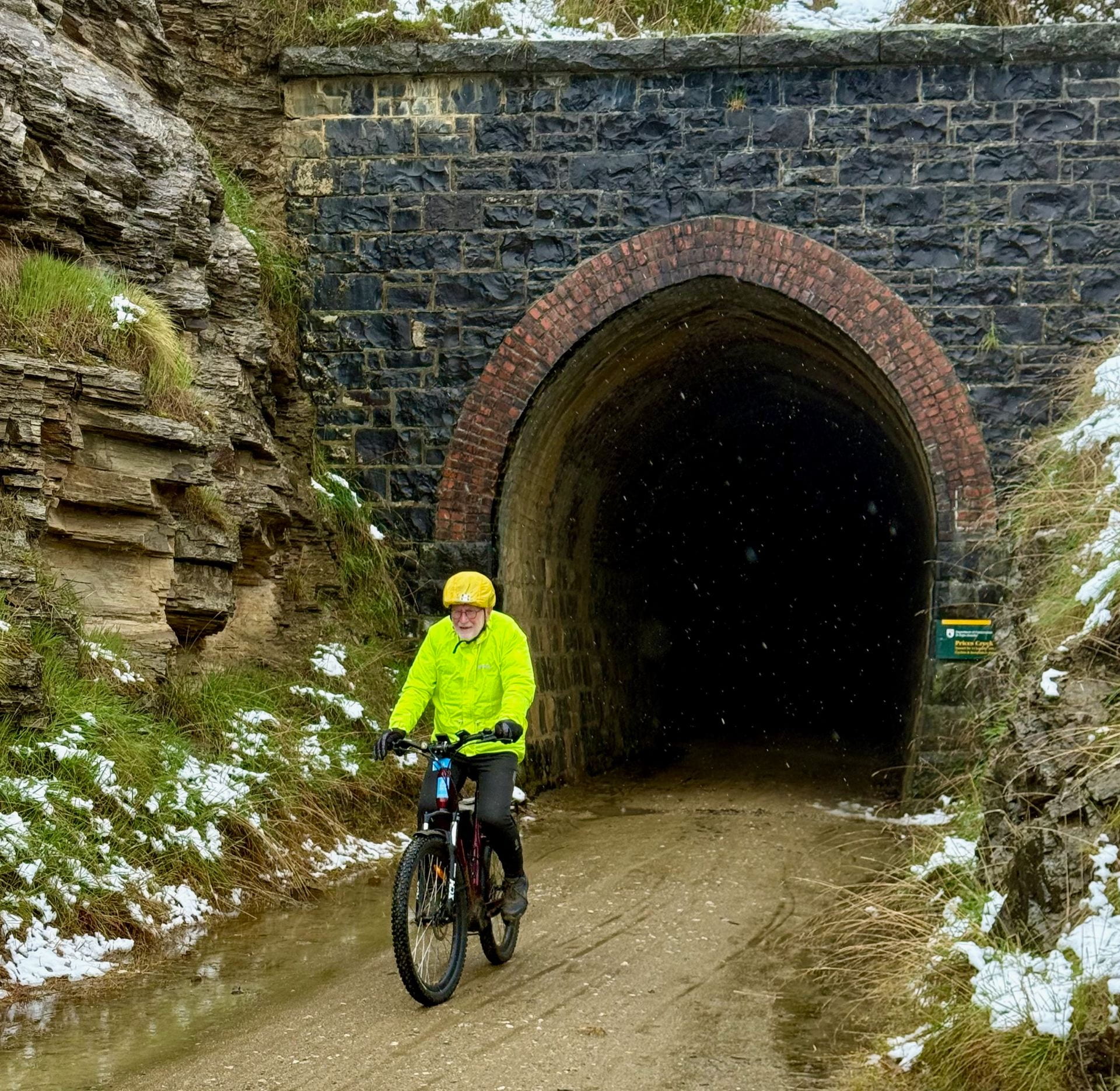
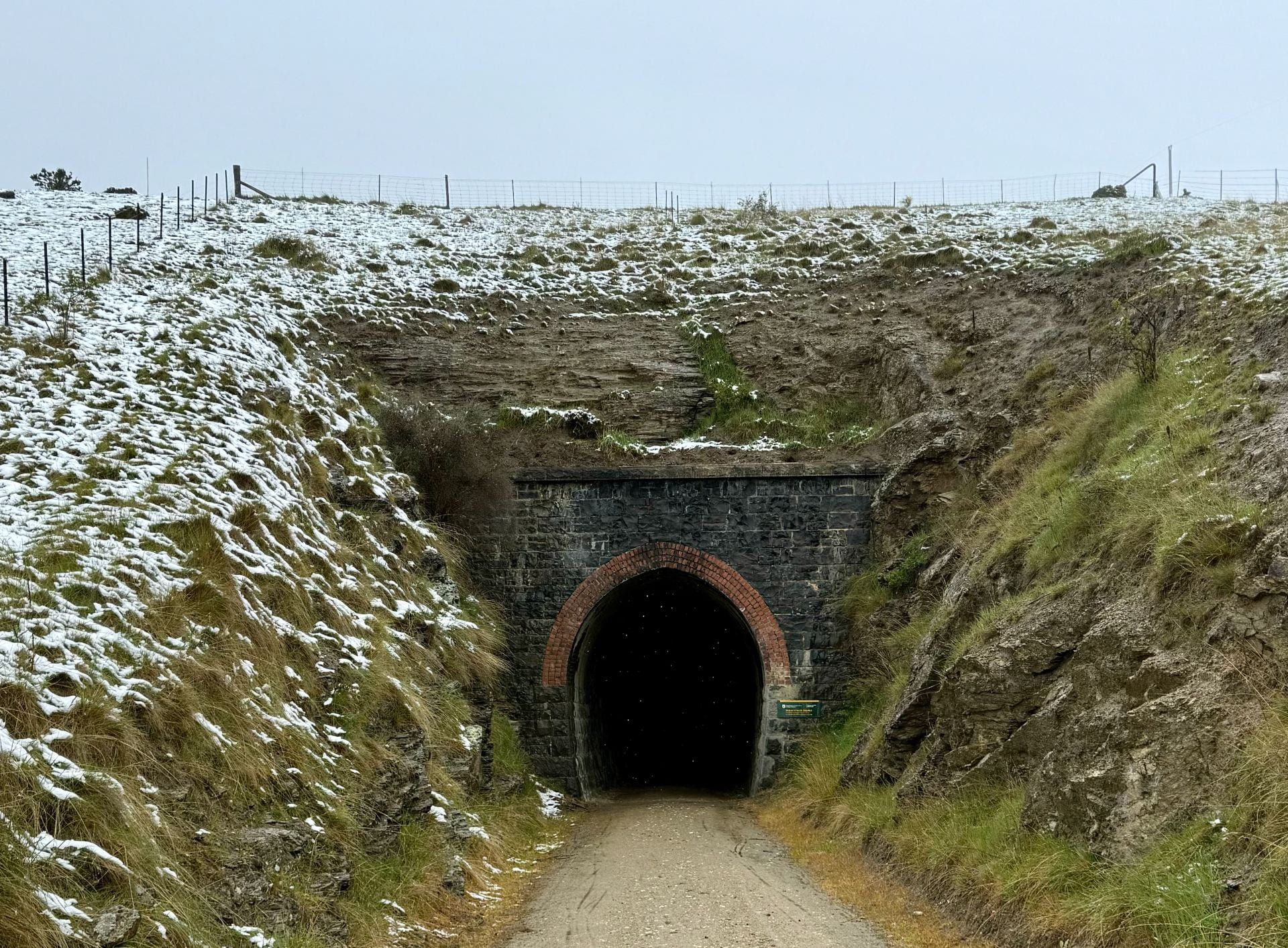
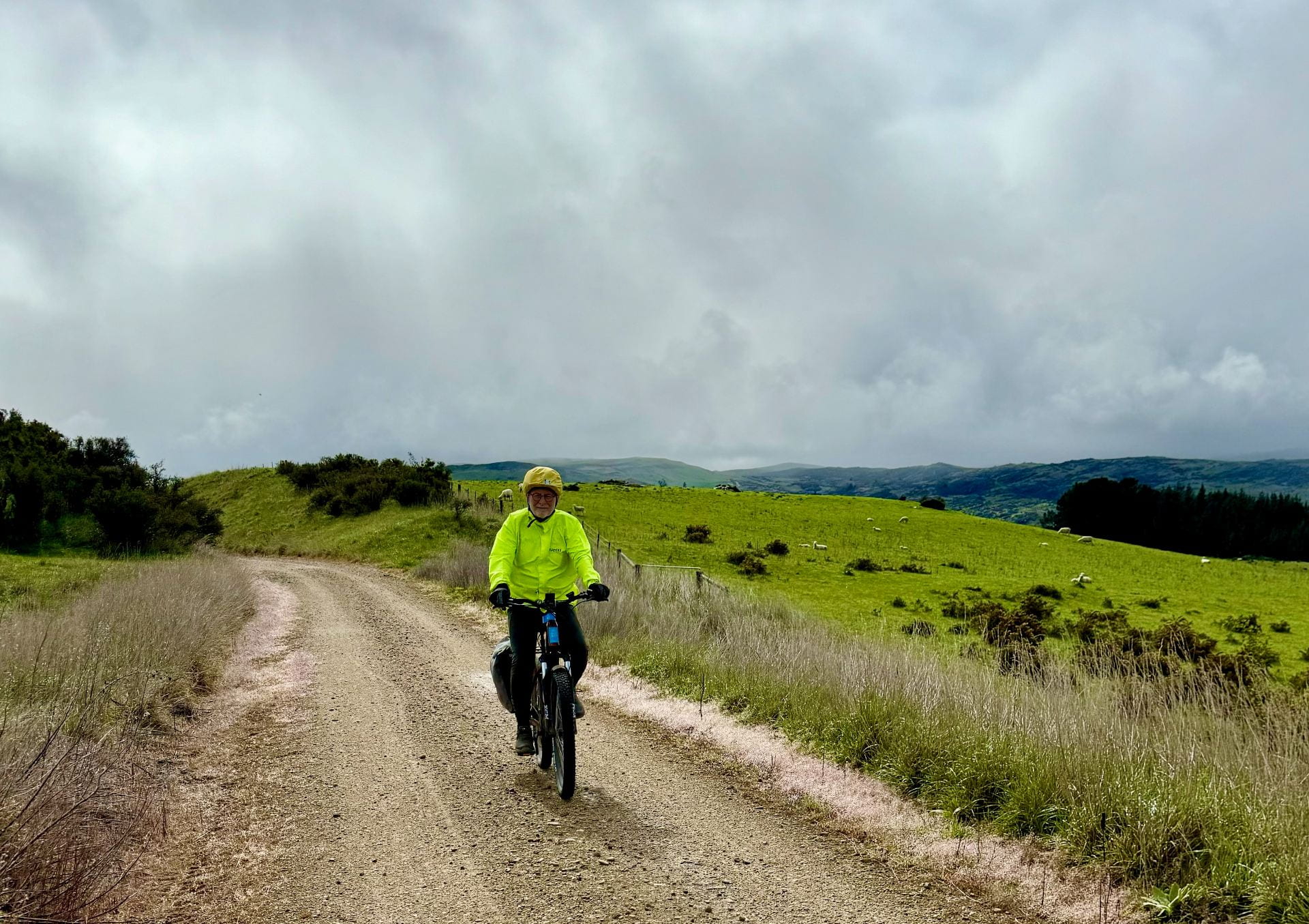
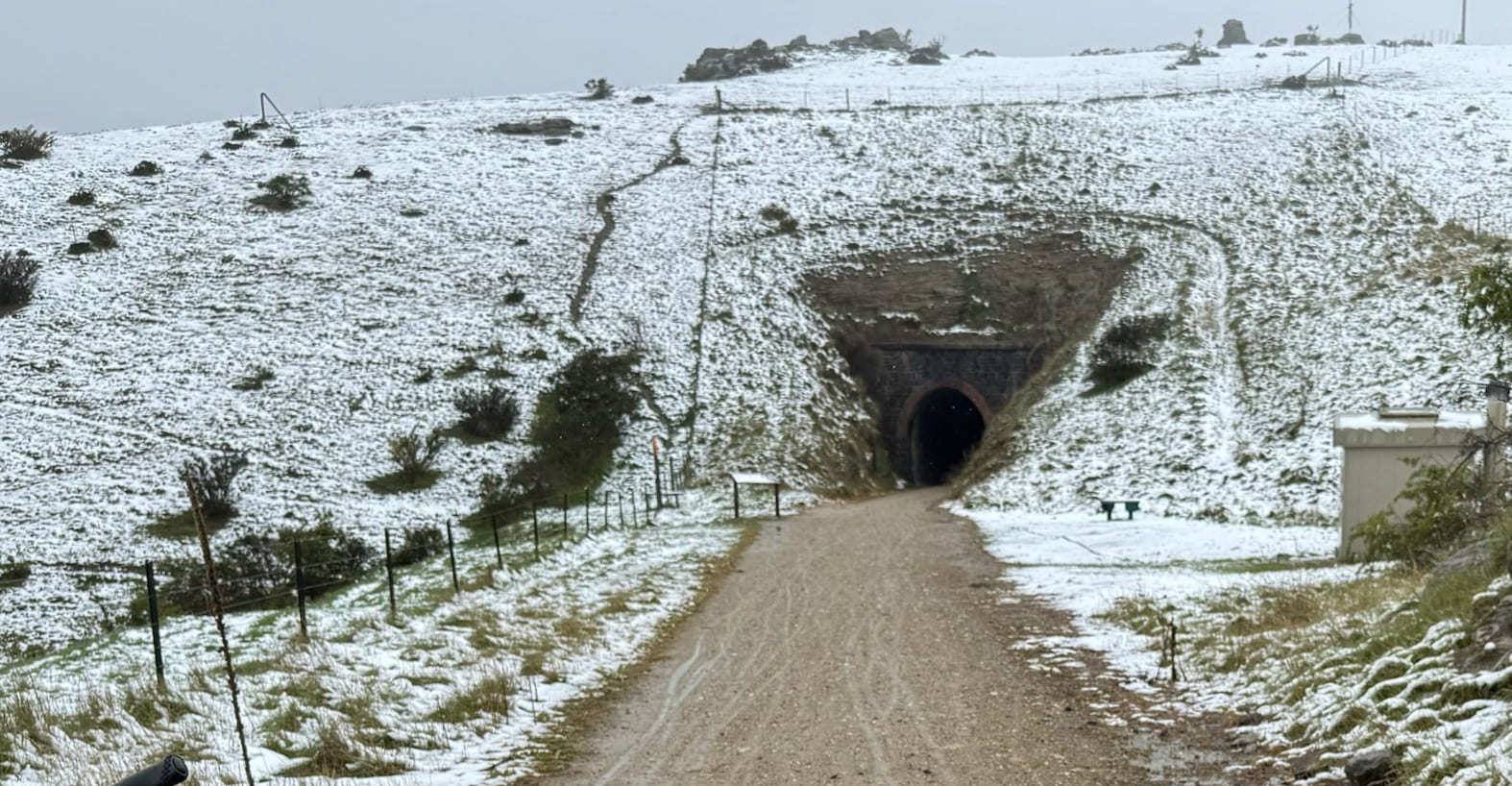
A tunnel between Waipiata and Hyde. The only shelter from rain and snow during the entire ride
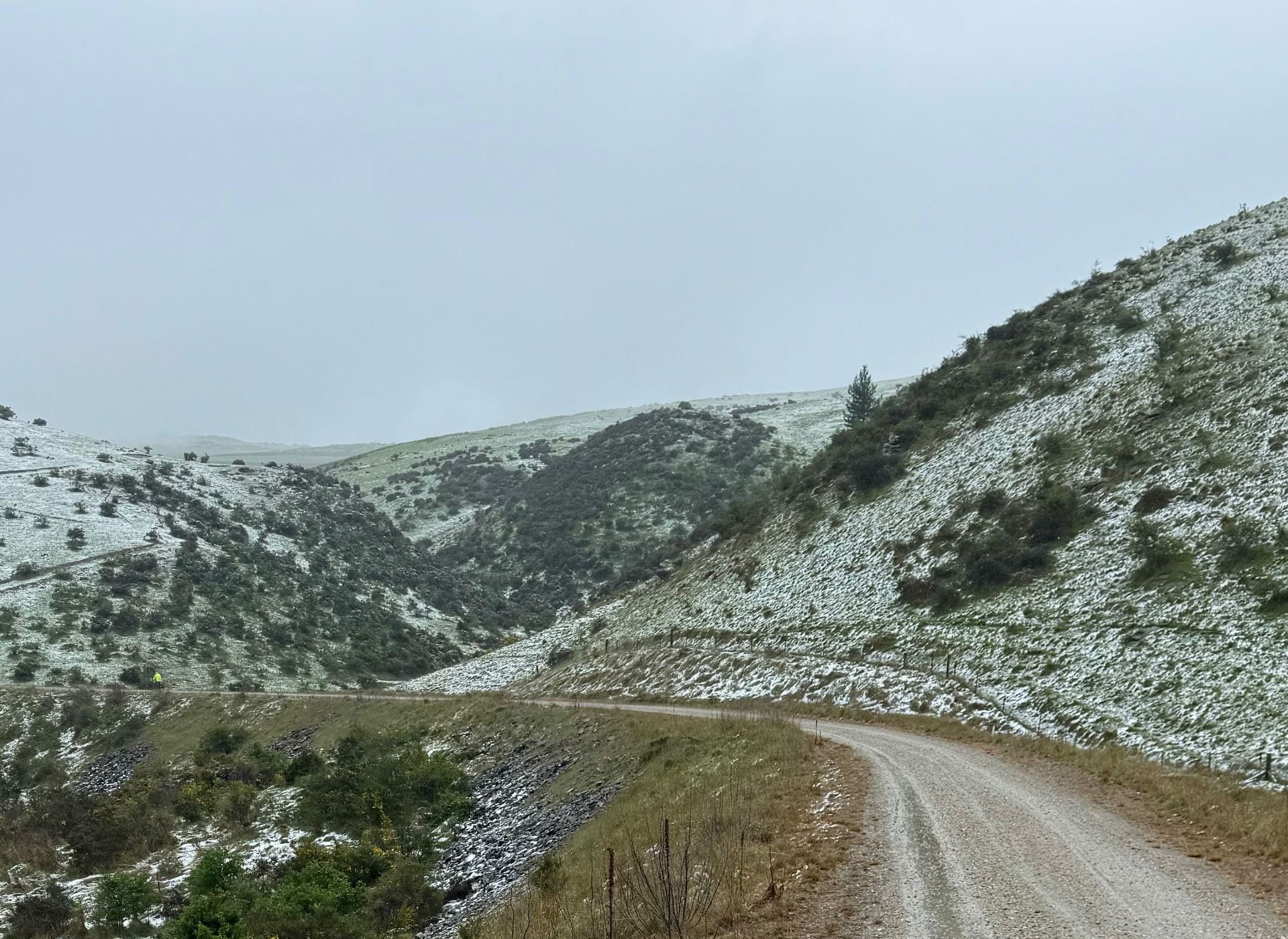
If the first three days of our bike ride were like a carefree journey through the undulating plains of Hobbiton, the next one felt like tackling that mountain, Caradhras, where the hobbits were almost buried in snow and barely survived.

When we woke after our rest day in Naseby, it was 1° outside, tiny flakes of snow were falling, and the forecast predicted uninterrupted rain and sleet, with no rise in temperature.

The forecast was spot on, for the rain was indeed constant and the cold unrelenting during the whole ride. The gravel track swiftly became wet and soggy, so that our bicycle wheels splattered us with mud and water from below even while we were being pounded with rain from above.
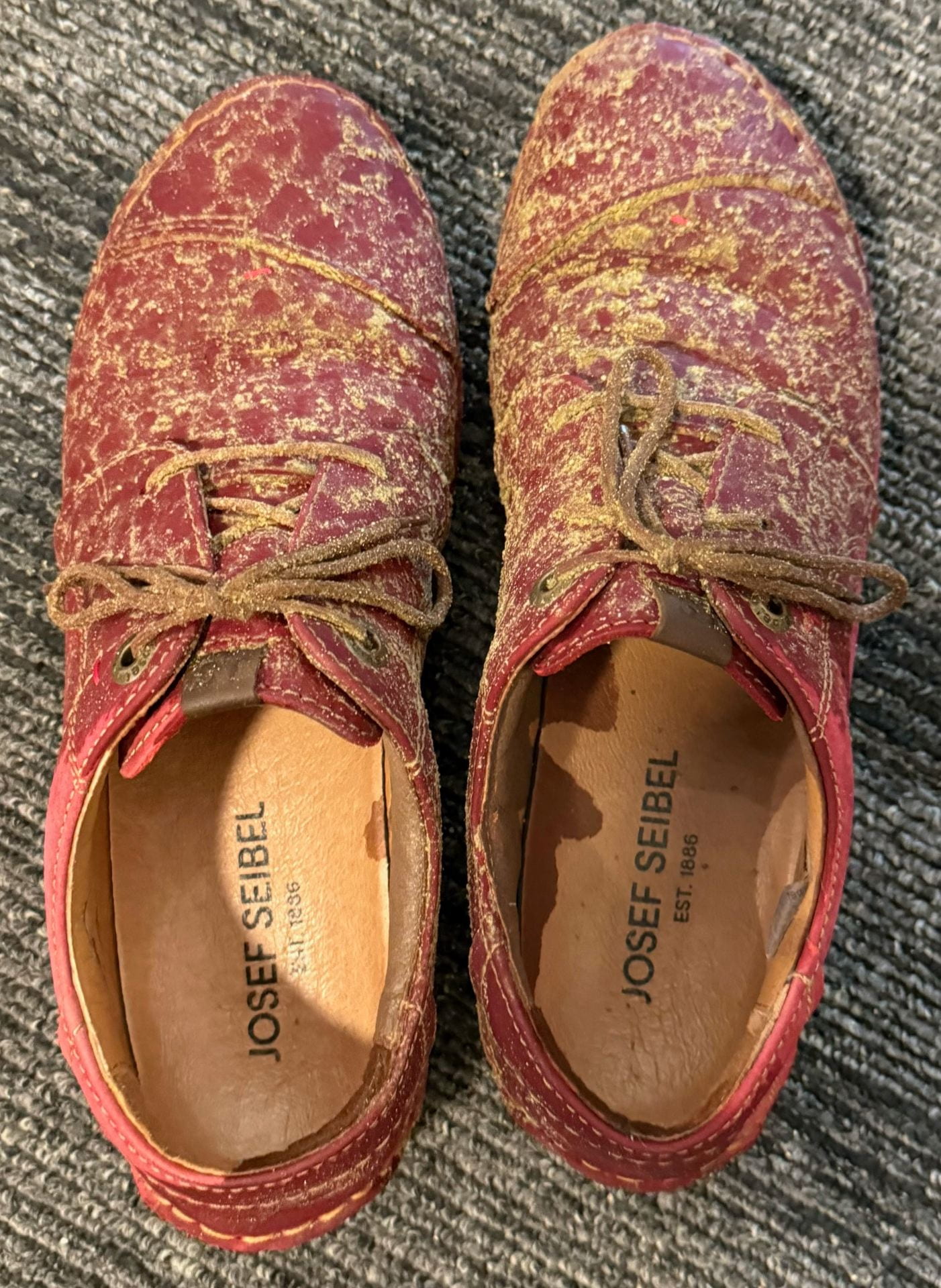
My shoes after the first eight kilometres
Eight kilometres from our starting point at Ranfurly, we enjoyed a brief and heartening reprieve at Waipiata Hotel. By then, we were already uncomfortably wet, but it was toasty inside and we hung our gloves, shoes, hats and scarves by the roaring wood stove fire, which radiated heat on three sides. It was like a friendly furnace. While we waited for our things to dry, we ordered ourselves one each of the famous Waipiata pies, which are chock full of real chunks of tasty meat.
Warming up by the fire at Waipiata Hotel
Meaty delight at Waipiata – “because everything tastes good in pastry”, as the Waipiata Pie Company puts it
Fortified, we set off on the last 25 kilometres with renewed optimism. It was unfounded.
Riding through snowy hills on the route from Wiapiata to Hyde
For the first two thirds of this stage, I diverted myself by listening to political podcasts and a German audiobook, but about eight kilometres from the end, I couldn’t even summon the energy to do that anymore. There was no respite from the rain; the surrounding hills were white with snow. The scenery was starkly beautiful, but I could no longer appreciate it. I began to count one for every fourth pedal stroke, then look at the odometer following each hundred. But there seemed to be so many hundreds.
It took so much effort to procure this photograph. See below 🙄
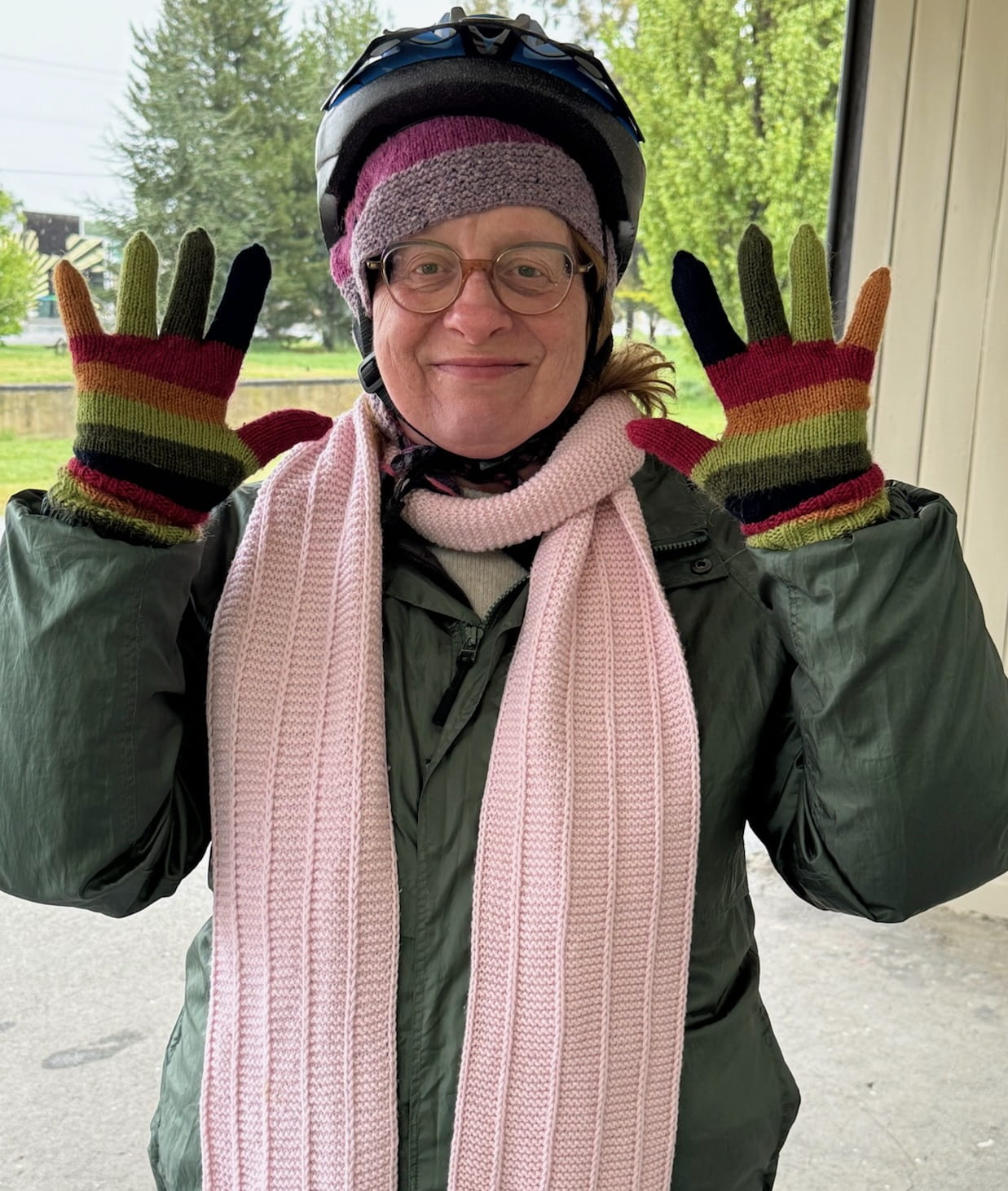
While my chest and back were protected by my trusty little Rainbird raincoat over my puffer, my shoes had filled with icy water and my feet were freezing. Oddly enough, although my knitted gloves were soaked through, they still provided some protection from the cold.
The cruellest part was that, when we arrived at Hyde, I realised with a sinking heart that our accommodation was a full kilometre further on. I had been nursing my dying battery (which evidently drains faster in extremely cold weather) and it gave out completely with 300 metres to go. I didn’t care because I could see the sanctuary in the distance by then. The thought of warmth propelled me on. It was more powerful than mere electricity.
The blood vessels in our feet may have constricted to protect us from the cold, because in the heat of the shower, we both felt our feet prickle and go red, presumably as the blood vessels dilated again. (The earlier phenomenon may be called vaso-constriction, but I am happy to be corrected.)
**
It took me a full hour after the shower to feel as though I was definitely going to survive. Somehow I doubt that I would be well suited to an Antarctic expedition.
**
The next day, for our final stage, the rain had passed and the ground had largely dried out. So it was actually a lovely ride, though I felt slightly suspicious of the clouds and it did begin to drizzle in Middlemarch.
**
Davey on the ride from Hyde to Middlemarch
**
As we surrendered our bikes to our kindly tour operators, another group of cyclists came in. “How did you cope with the weather yesterday?” they were asked. A woman in perfect wilderness clothing replied with a tinkling laugh that it was actually very beautiful and they had taken some wonderful photos.
**
I looked at her with hatred. Taking photos during that last 25 km ride into Hyde had felt like an extreme sport. I had had to take off my sodden gloves, peer through my speckled glasses, try to operate my slimy phone screen with my numb hands, and point the thing in the right direction while the elements were blasting me from every angle.
**
We discovered through probing questioning that the group had actually stayed at Waipiata, so they had missed that last 25 kilometres. Those weaklings in their fancy outfits—no wonder they were so nauseatingly cheerful and bumptious. Pah!
**
Despite the Day 4 ordeal, the Rail Trail was memorable and delightful. We loved the little shops in remote villages, the cafes with “pizza scones” and other Kiwi inventions, the friendly hosts and drivers, the historic towns, and the sweeping landscapes. I could do it all again, as long as I could bleep over Day 4.
**
Rosi ❄️
**
NB Several other cyclists were “rescued” by tour operators during that fourth leg, so in retrospect we felt as though we did quite well to survive it with all our toes intact. 
Arriving in Middlemarch at last, dry and flushed with a sense of achievement
Essential Links
All green again on the road from Hyde to Middlemarch
The sun came out on the final day!
A typically charming café in Middlemarch—the Kissing Gate Café
Inside a tunnel between Waipiata and Hyde
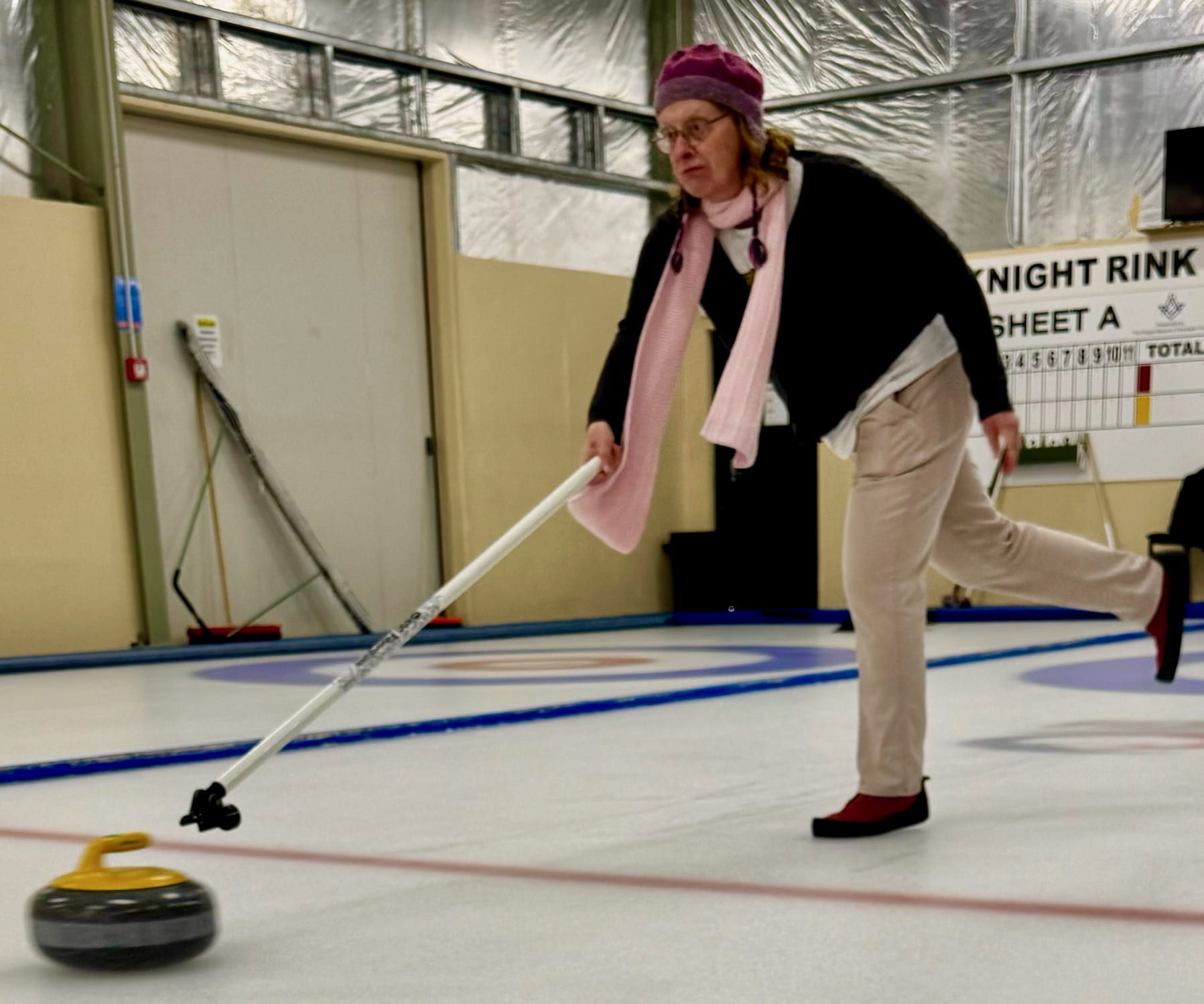
Curling at Naseby. Gosh, it was fun. Davey was more skilful than I was, not surprisingly.

On the Otago Central Rail Trail, Days 1-3

A twisting trail through hills, valleys and stony outcrops

Taking this cycling tour through Central Otago is like setting out on a journey through the friendliest parts of Middle Earth. Our ponies are electric bikes with thick, trusty tyres, the people whom we meet are as friendly and hospitable as hobbits, and the landscapes around us are a pure scenic delight, with pubs and cafes at every turn.

Signpost at the halfway point: the trail runs from Clyde to Middlemarch

David booked the whole tour through Big Sky Bike Adventures, and they, like all tourist operators whom we have encountered in this quietly efficient and welcoming land, have been meticulous in their planning and responsive to all our requests. On the first day, they sent a shuttle bus to Queenstown to bring us to the historic town of Clyde, where we began our tour. Once we had collected our bikes from John, who explained their intricacies with the minimum of fuss and jargon, we set off immediately. We could not bear to wait even to wander through the old village of Clyde. Hmm, at least that leaves us with something to add to our to-do list during our next trip to this utterly irresistible land.

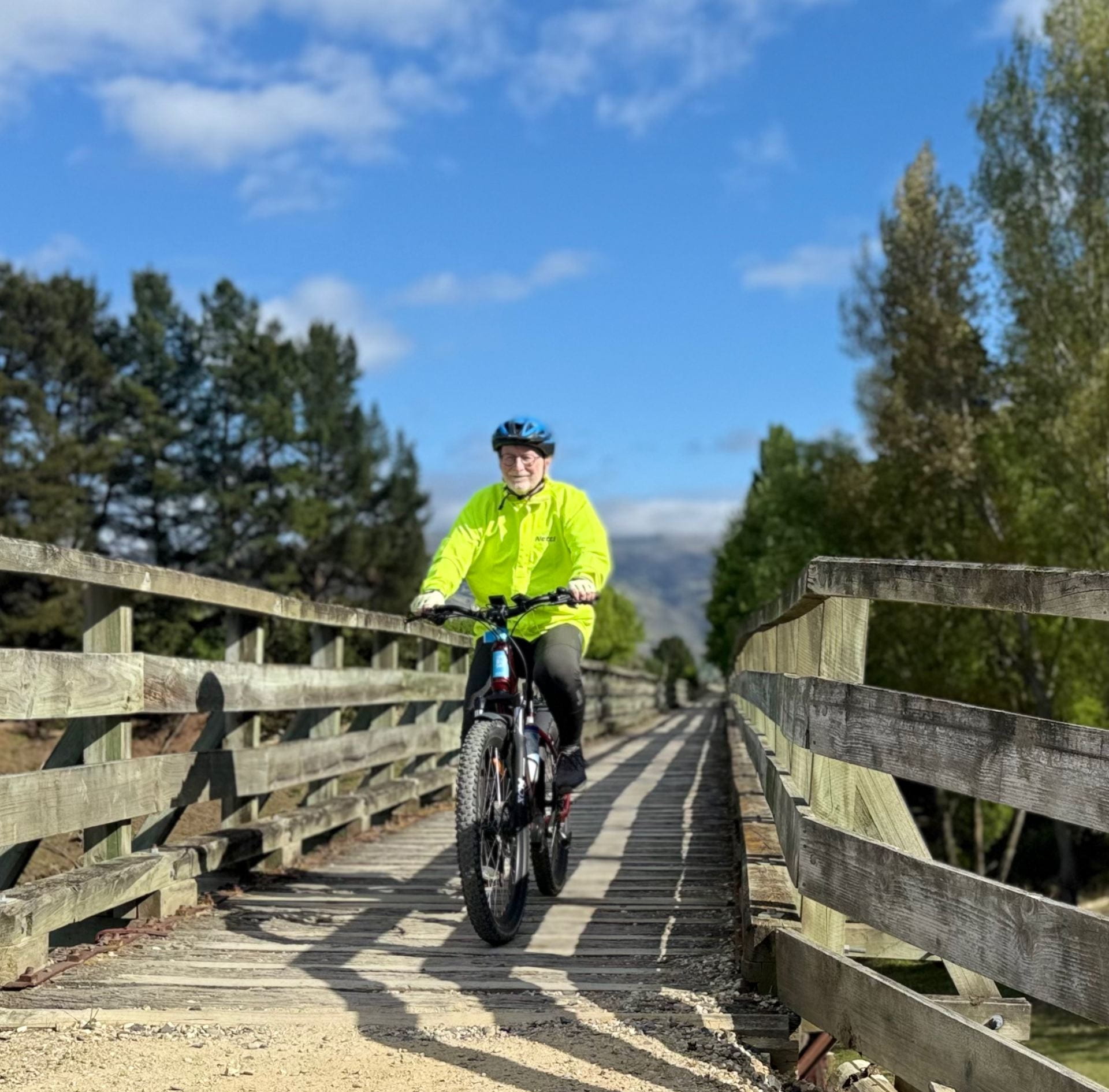
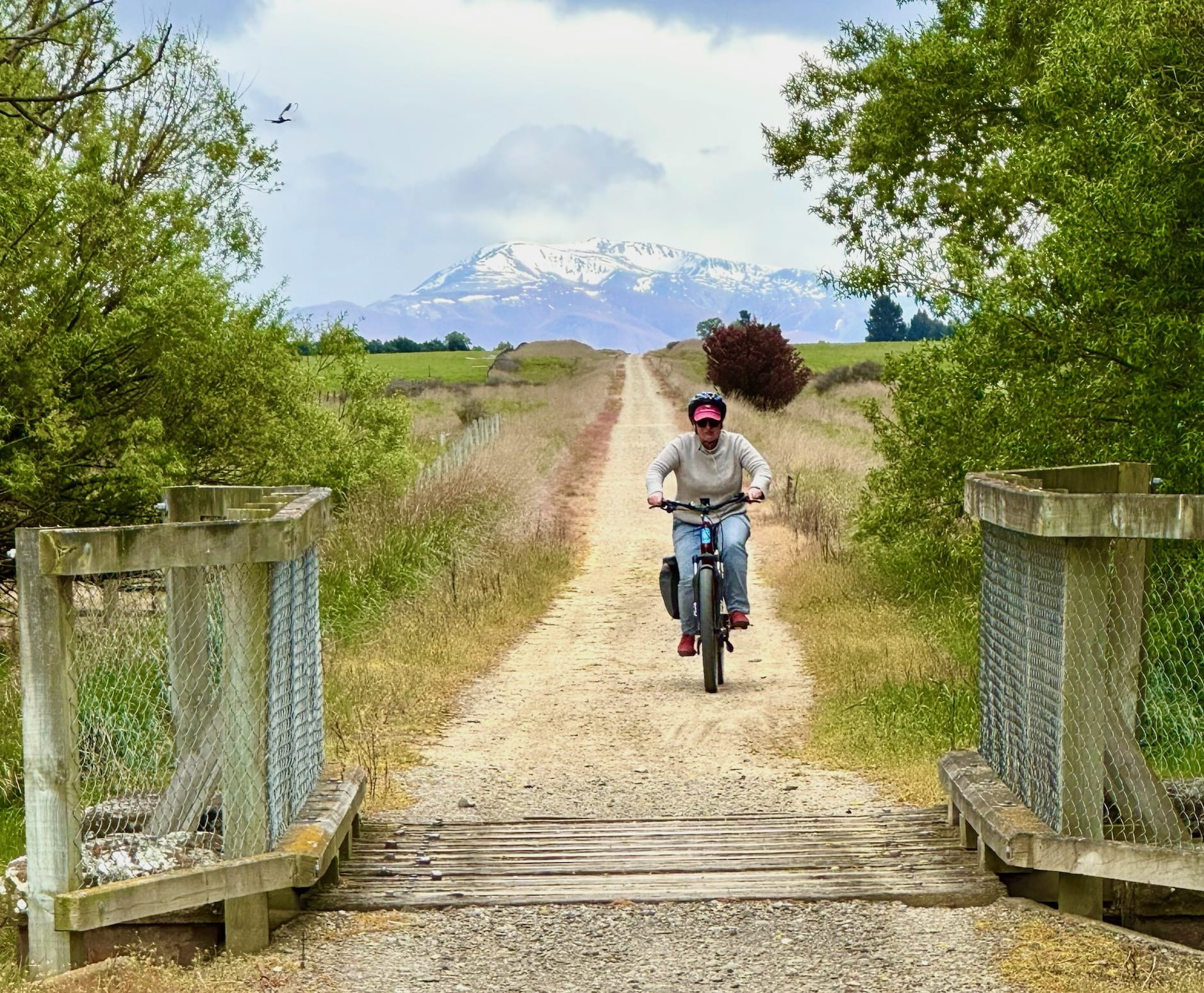
The trail is peppered with bumpy wooden bridges. They are as beautiful to the eye as they are painful to the bottom.

Once we began to ride, I felt strangely content, as though cycling along this gravel path formed upon an old railway line built during the gold rushes, and admiring the sheep, mountains, plains and old bridges, had always been my sole ambition on this trip. Yet in reality, this part of the holiday was supposed to cater to David’s fixation on cycling, his predilection for embarrassingly colourful lycra outfits, and his fondness for frequent Strava uploads. Had David finally found a way to win me over to his cycling-mad team? 

Against my expectations, the terrain included rocky outcrops that seemed familiar to my Australian eye. In every other respect, however, the landscape was classically Aotearoa:  the snow-capped mountains in the distance, the clouds that dipped and twisted between the rolling hills, the greenness, the quiet, swirling beauty.

The old post office in Ophir, established in 1886 and still operating as both a post office and a museum

We spent our first night in Ophir, another charming gold period town with old stone cottages, churches transformed into tourist accommodation, a still-functioning post office that first opened in 1886, and a bridge hewed out of rock. The only place to eat there is Blacks Hotel. After a delicious meal, we meandered along the main street, admiring the old stone buildings and the well-tended gardens.

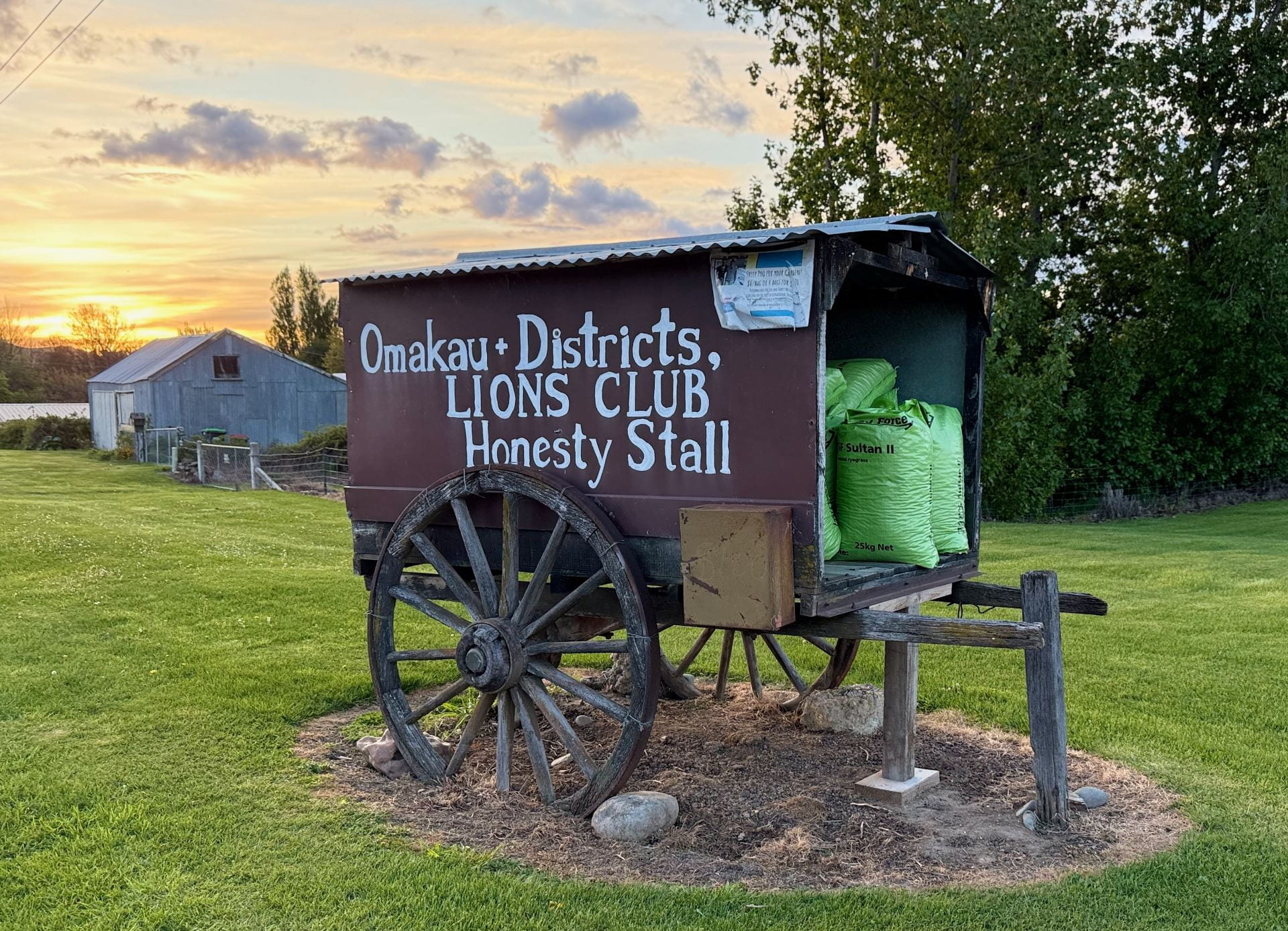
A stall selling sheep manure in Ophir
The magnificent old suspension bridge at Ophir, built in 1879-80

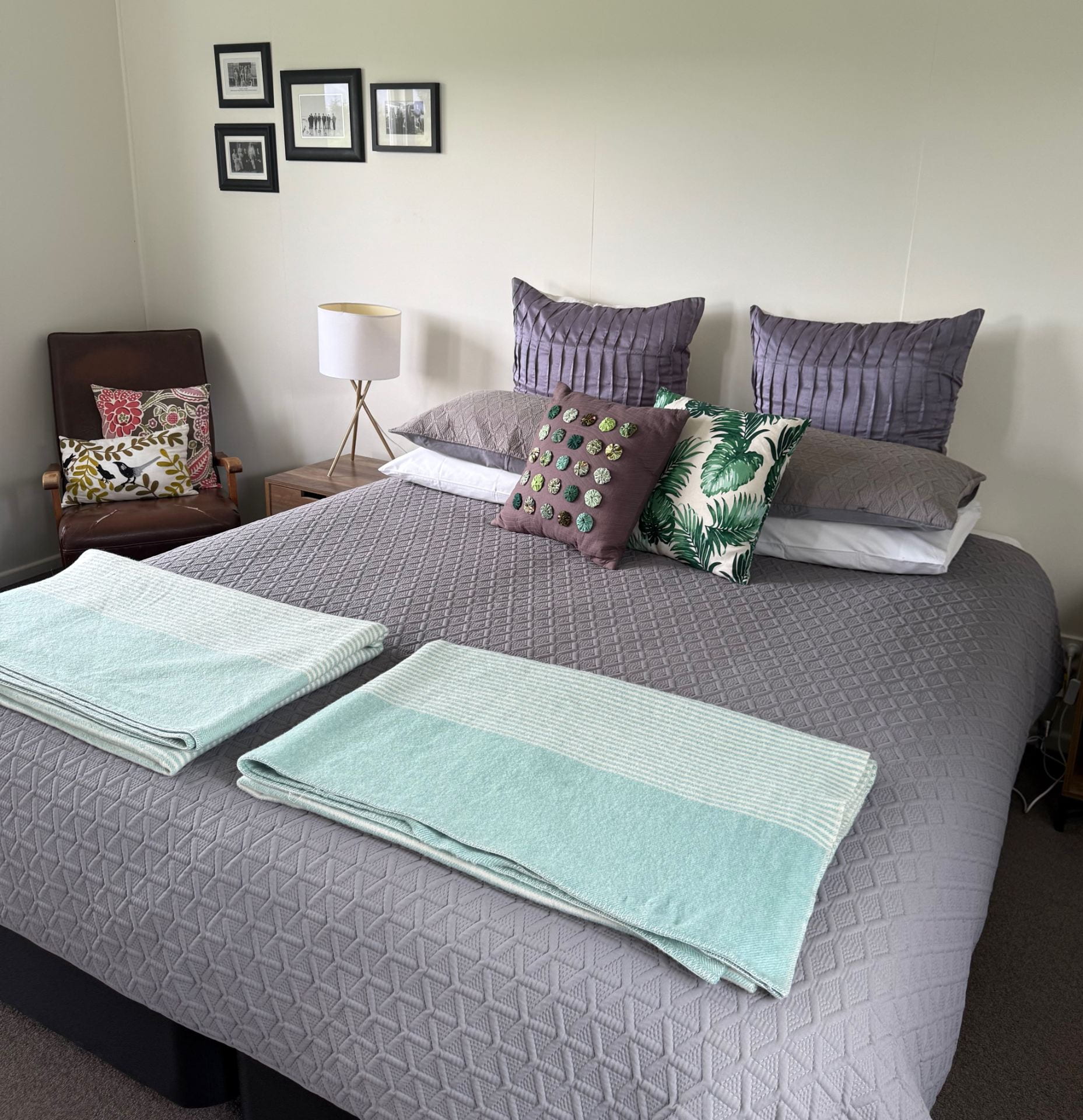
Our favourite night stop so far has been Braeside Farm, where we stayed in the beautifully renovated shearers’ quarters. Every part of our bedroom, as well as the kitchen/lounge, had been designed with attention to comfort and detail, from the green woollen blankets on the bed to the photographs on the walls to the cushions, the crocheted rugs, the crockery and the farm-made honey. The farmer who collected us from the little village of Oturehua, Philippa, explained that the farm has been operating for over 100 years, with thousands of sheep and some cattle. In winter the cold is intense, with temperatures dropping to -18 degrees overnight and whole days never rising above zero. Yet the region is hot in summer and generally dry, partially because of the surrounding mountains.

Our room at Braeside Farm
Kitchen / lounge at Braeside Farm
Clouds rolling in…

The weather for our third day of cycling looked ominous. Philippa recommended that we download the YR app, made in Norway but commonly used by New Zealanders. Sure enough, it predicted heavy rain; the early morning clouds, in keeping with this warning, were dark and menacing. Yet Philippa was sanguine when she came to drive us back into the village. “I reckon it’s going to pass you by,” she said. “I’ve just got a feeling.”

Philippa was right. We rode through the grey morning to Wedderburn, near the high point of the route, then rolled down the long descent into Ranfurly without feeling even a drop of rain.

A threatening morning cloud

The people of New Zealand are not merely kind, hospitable, light-hearted and welcoming; they can also tell a rain cloud that’s just there for show from one that’s going to drop a torrent of water on you. Are they wizards as well as hobbits? I mean seriously, what more could travellers ask for?

Rosi 🚲🤍🖤

Essential Links

  • Otago Central Rail Trail: The region, its history, and the details of the trail 
  • Braeside Farm: Best accommodation so far and a delightful place to wander through trees and along water courses, while observing the sheep protected from the weather in the gullies between the hills
  • Big Sky Bike Adventures: Our highly recommended tour operator, who even responded when David sent them a plaintive message about how to regulate his bike computer 🙄
One of the planetary sculptures that adorn the trail
Memorabilia at the general store in Oturehua
An old tunnel from the days when trains rumbled through these hills
Approaching a tiny wooden bridge

Experiencing Queenstown as an Older Person

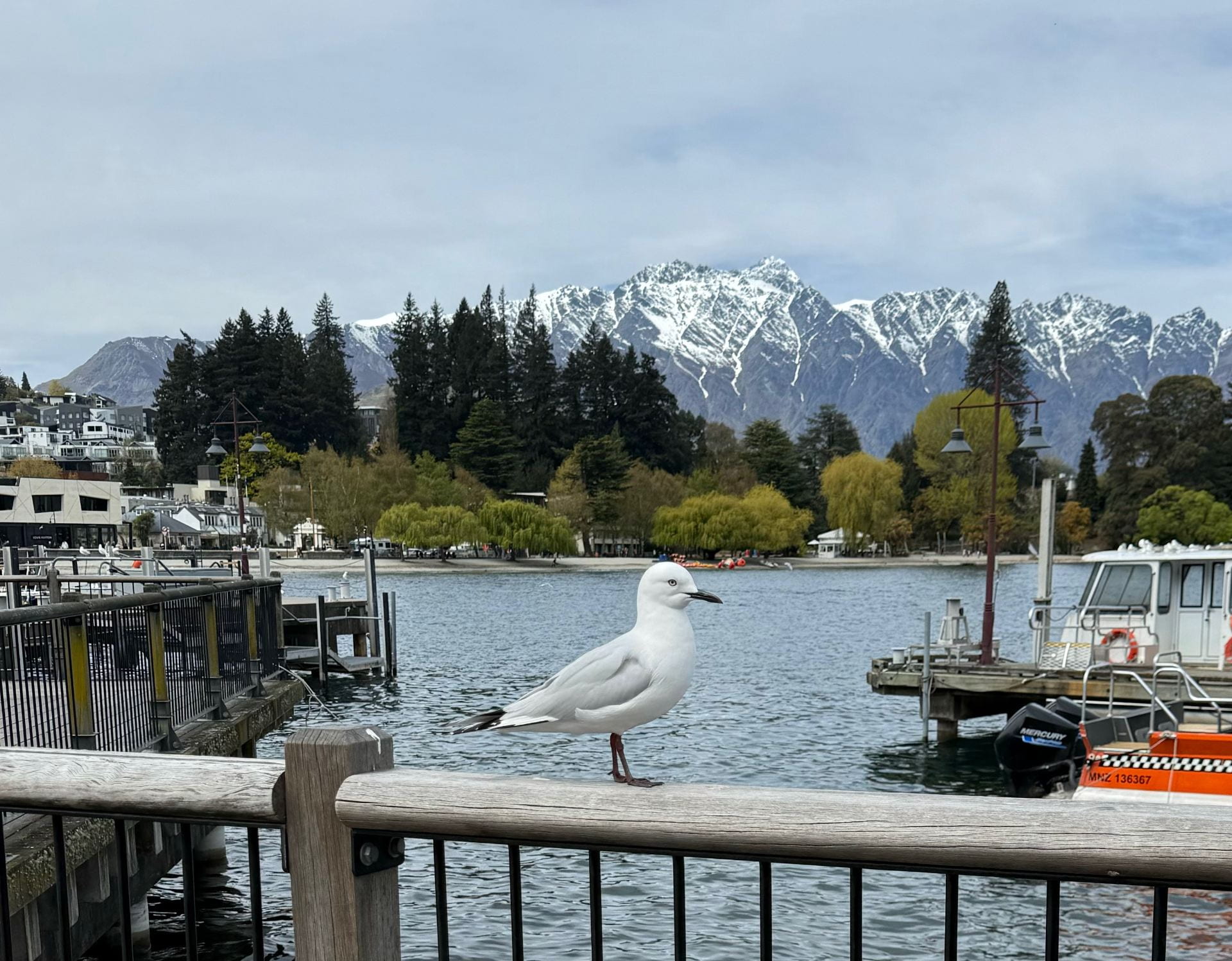
The Queenstown Waterfront in the late evening light

Queenstown is the kind of town that gives older people like us low self-esteem.

Fire-eating on the Waterfront

All the adventurous activities on offer require a daredevil attitude and a willingness to expose one’s body to physical challenges entailing cold water, steep mountainsides, or freezing air.

Some of the businesses that offer death-defying options such as bungy-jumping and paragliding advertise on their shop windows: “Live more, fear less.” 

This kind of slogan makes me feel inadequate, yet defiant. I’d rather cling to my fears, thanks very much.

Davey explores the eating options at Steamer Wharf

As a result of my second and Davey’s first dose of Covid, we arrived here in a fragile physical state. Five hours of walking around the town, drinking in the beauty of the waterfront, wandering through the shops and exploring the eating options, wore us out completely. We had to withdraw to our motel and sleep. Clearly, we were not living up to Queenstown’s expectations of us.

Ahh, ginger slice at last. And carrot cake.

Yet the exploring felt like a happy adventure all the same. We found our favourite coffee place, The Outpost in Beach Street, an ethical goods shop offering hand-knitted objects from Nepal and “positive energy” of every artisanal kind. Each day, we popped in to FergBaker to buy some treats for lunch, then sat outside the Outpost to eat, drink coffee and watch the passing parade. 

All those young people doing white-water rafting, taking shotover jet boat rides and riding baby luges down the mountain need to have fun, indulge in retail therapy and eat the best fusion food the rest of the time. So they congregate outside Fergburger, visit the restaurants near the Steamer Wharf, wander through the stores of luxury goods, or hang out on the waterfront to watch a fire-eater with burn marks on his arms but a throat somehow magically unaffected by firebrand consumption. 

Hanging out in the Queenstown Library to get our energy back

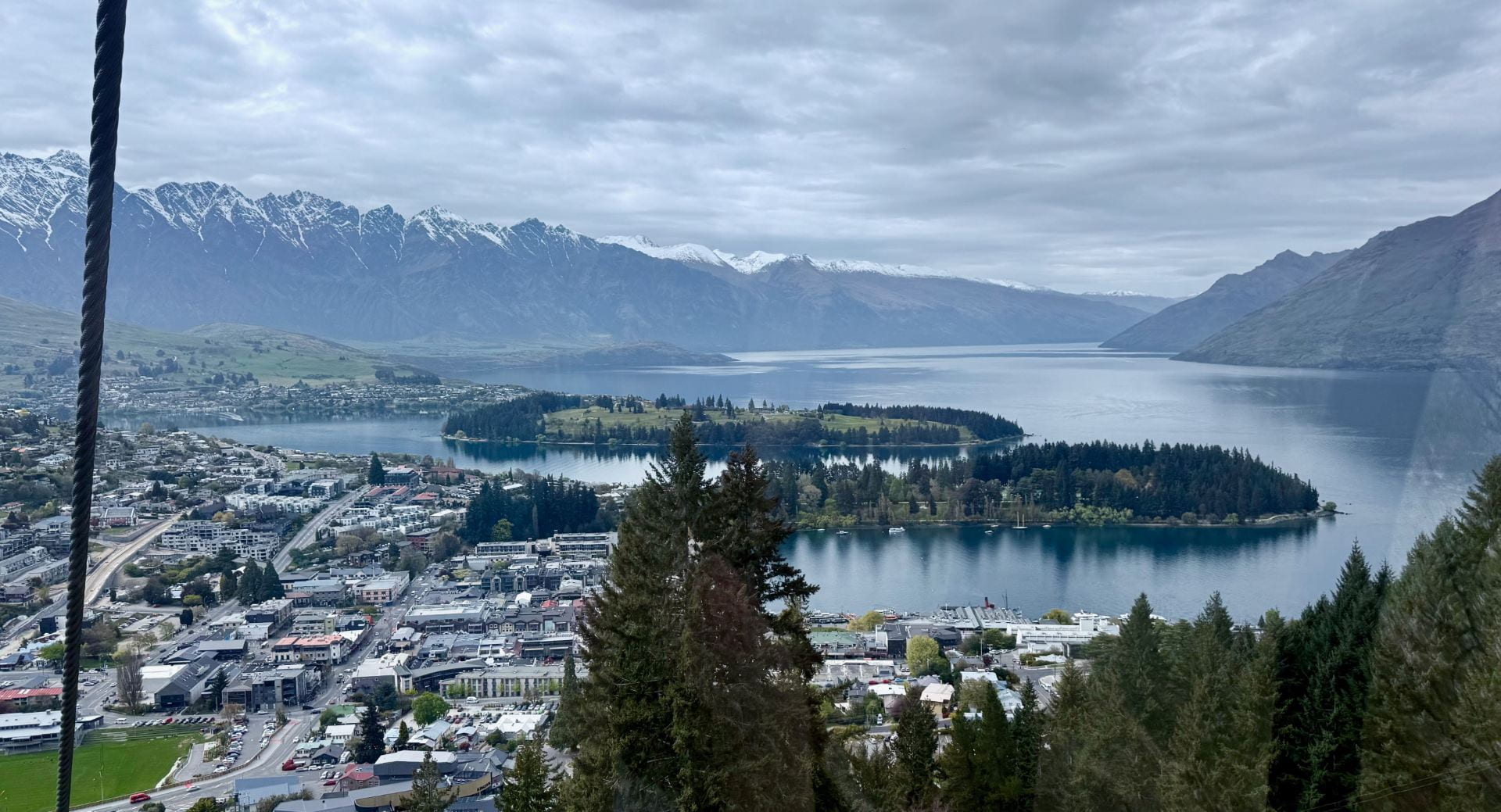
Feeling that we should at least venture something unadventurous, Davey and I took the Skyline Gondola 🚠 up to Bob’s Peak, where we admired the panoramic views of Lake Whakatipu and watched all the younger people driving single-person luges down the track. I was expecting whiplash injuries and spinal realignments, because they all drove with happy abandonment and ran into each other quite often, but no one seemed to mind. Instead of endangering our necks and spines, Davey and I took a sedate (but horribly steep) loop walk to admire Ben Lomond from a safe distance. Then, exhausted by our efforts, we sought out our happy coffee place, visited the welcoming library, and finally walked home for a Covid-induced nap. 

Queenstown is too young and vibrant for us, but we love it all the same.

– Rosi 😢🤍🖤

Watching the passing parade

A gondola on its way to the Skyline 

View of Ben Lomond

Essential Links

  • The Outpost: For coffee, open-hearted discussions and hand-knitted woollen goods
  • Skyline Gondola: For panoramic views and choices between sedate walks and luge descents
  • Eric’s Fish and Chips: A small concern with delicious fish options
  • Bella Cucina: Italian restaurant with red and white tablecloths, helpful staff and delicious pasta and pizza
Panoramic view from the Skyline Gondola
The effortless beauty of lake and mountains

Back to Queenstown

The view as we flew in to Queenstown Airport

My thoughts about returning to New Zealand were embarrassingly shallow.

💭 “Oh good, I can eat ginger slice again.”

💭 “The safety video on Air New Zealand will be fun to watch.”

💭 “I can buy more wool in Wanaka.” 🧶

💭 “They make the best pies over there. Can’t wait to eat one again.” 

💭 “Now that I have a new iPhone I’ll be able to take better shots than Davey.”

My beautiful Kiwi friend Linda, who frequently misses her homeland, did her best to prepare me for the arrival experience. “Make sure you look up from your knitting when you’re coming in to land in Queenstown,” she told me. “It always makes me cry, it’s so beautiful.”

Consequently, I began to watch dutifully from about 25 minutes out and thought initially that all I was seeing was some little fluffy clouds high in the sky. Then I realised that those clouds were actually snowy mountain caps; that the coast was rising gracefully out of the ocean; and that there were dark turquoise lakes nestling in the hollows and valleys.

There was something about the casual sweep of those mountains and the untouched snow that made me forget all about the bakery fantasies, the welcome video, the adorable Kiwi accent of the pilot, and the pastry pleasures to come.

The thing about New Zealand is that arriving here feels like having an adventure and coming home at the same time.

Yeah, so hopefully I’ll find that ginger slice tomorrow.

Rosi 🖤🤍

Essential Links

Leaving New Zealand for a Land without Lolly Cakes 🥲

Blue boat sheds on the wharf of Akaroa

We have checked in for our flight home tomorrow and I have to admit that I am looking forward to living out of a wardrobe again. Despite this, we keep talking about our next visit(s) to New Zealand. 

We feel as though we can’t leave this land of unremitting beauty behind us without a mental promise to return. 

Here’s a short list of our favourite things about New Zealand:

1 The people are light-hearted, unassuming, friendly, witty and considerate.

2 The founding national document is a treaty with the Māori people. If only Australia had anything like that with the Indigenous people of our land.

3 The libraries that stand in the CBDs of all major cities and towns provide safe welcoming spaces, along with learning and social opportunities. Anyone can enter: students, tired travellers and people who are down on their luck. I believe that this is evidence of sheer human decency on a large scale.

Outside a shop in Te Anau

4 This country offers more beauty per cubic metre than I’ve ever before encountered, from rugged mountains to rolling hills, from lakes to fiords, from wildlife to wildflowers, from birds to birdsong. It’s like exploring paradise.

5 The Murdoch press no longer exists here. We noticed that there are a number of local papers still in existence, such as The Otago Daily Times and The Greymouth Star

6 After a long period in which the Māori language lost ground, partially through repressive policies in the first half of the 20th century, it has made a comeback, thanks to activism in the 1970s and 80s and continued commitment in modern times. Now all signs are in both English and Māori. If you’re a New Zealander, even one living in Australia, you can undertake a free course to learn the Māori language.

Davey walking up Baldwin Street in Dunedin

7 The range of cakes, muffins, slices, scones, rolls, pastries and pies has to be seen and tasted to be believed. We would be rolling back across the Tasman Sea if we hadn’t walked so much.

8 The mobile coverage is remarkably widespread and reliable, even in remote areas such as Mount Cook National Park. We bought prepaid e-sims through this company and they worked seamlessly.

9 The people who oversee and work in the tourist industry seem to be dynamic, friendly and professional.

10 Everything tastes good here, including basics like water and milk. The variety of exotic restaurant cuisines is remarkable in such a small country.

What a lovely, happy place it is. I’m so glad that we live right next door.

Love from Rosi 🖤🤍

On the pier at Akaroa
A colourful house in Akaroa 
Mount Cook National Park
View over Akaroa as we drove in across the hills
New Zealand A to Z wrapping paper

Milford Sound and the Limitations of my Knowledge

A dark, mysterious and magical place…

There are times when Davey’s superior geographical and geological knowledge is quite useful. “That’s a mesa,” he has been known to say on a long road in Australia. “A flat-topped hill. With steep escarpments.” And then he elaborates until I stab myself with a knitting needle.

Sometimes, he tries to have me on. As we were driving to Dunedin from Te Anau, we saw lots of pointy little hills poking up from the rolling green farmland. They were distinctly perky and unusual. “Those hills are called Cleopatra’s breasts,” he said. There was an infinitesimal fraction of a millisecond in which I thought, “Is that something else he learned in 1973 in Geology 101?”

Davey’s knowledge did come in handy as we were preparing for our trip to Milford Sound. “You realise it’s not a lake,” he said. “It’s a fiord.”

“Of course,” I replied, rolling my eyes.

Actually, I’d had no idea. Now that’s embarrassing.

Our cruise boat: The Milford Haven

I have to admit that this was useful knowledge, for our friendly and expert “nature guide” on the Milford Haven provided many details that would not have matched a lake-like entity. One of them was that Milford Sound is quite well hidden from the sea, so Captain Cook sailed past it twice without noticing it or adding it to his otherwise impressively detailed maps. The steep rock sides were originally carved out by glacial erosion. The water is up to 400 metres deep, and since the sides of the cliffs are often almost vertical in some areas, our little cruise boat could cosy up close to the rugged rocks and let us all experience the spray of the waterfalls on our upturned faces. Davey and I had to go inside to clean our glasses.

A tiny penguin on the rocks dries its wings

The trees and vegetation that cover the rock surfaces have very little to dig their roots into, so they tend to interlace their roots with those of other trees. This means that if one tree begins to slide, a whole vertical strip of the rock face can be denuded. And there are powerful erosive forces at play, including an annual rainfall of 6,813 millimetres or 268 inches. Rain falls on around 182 days a year.

We were lucky because the sun shone for some of the time and there were patches of blue sky. It was a relatively mild day, so a jumper, raincoat and scarf were all I needed to stay on deck and be mesmerised by  the deep turquoise waters and the towering rock cliffs looming over us.

One of the hundreds of waterfalls on Milford Sound

“I’d like to come back when it’s raining,” Davey said.

“Why?” I asked. “Wouldn’t it be freezing cold and horribly windy?”

“But the waterfalls would be so powerful,” he responded. “Just imagine.” 

Of course, he had a point. The waterfalls would swell and multiply—and they were already dazzling on a rainless day. Many parts of New Zealand have the kind of ever-changing beauty that only intensifies in turbulent weather conditions. Every encounter is distinctive.

So Davey was right again. My dear old geological advisor.

Love from Rosi 🖤🤍

Blue skies over Milford Sound
Some blue, some misty clouds, some more waterfalls…
During a quick stop on our bus drive into Milford Sound, a kea hopped onto the bus and began to chew at the rubber pieces surrounding the door. Keas are highly intelligent birds and this one was cheeky and incorrigible.

One Other Activity…

All we did in Dunedin was walk, including up the steepest street in the world. I had hoped to knit on the way up, perhaps as a counterpoint to the lively young people posing for Instagram by doing handstands or lying on the steepest part with distressed expressions. Of course, once I’d walked the first one hundred metres, I realised that I needed all my energy for the climb. And I ruminated on how walking around Auckland and Wellington, and in other steep places all over the country, had been excellent training for Baldwin Street.

I love the understatement in the sign at the bottom.
Trudging…
Distinctly flushed but triumphant
Some light reading on the walk up
A welcoming coffee shop in which we could soothe our weary bones afterwards