A colourful croc on a Darwin wall

We slept in our little tent for 50 nights straight between our cabin in Ravensthorpe and our hotel in Darwin.
During that time, I didn’t fantasise about beds at all. Well, only occasionally.
All the same, sleeping in the Cavenagh Hotel room in Darwin undoubtedly had its pleasures: stretching out in bed, napping during the late afternoon in an air-conditioned room and, most luxurious of all, having a toilet only 3 metres away.

Our room was rather dark, with a skylight but no windows. It was the exact opposite of being in the natural world. To my surprise, even while I enjoyed the comforts of city living, I missed waking up with the dawn and listening to the birds.
There were of course many consolations, especially the fleshpots of the inner city. All the way along Knuckey and Bennett Streets were diverse restaurants, bars and ice cream shops, rocking even on Monday night. We particularly liked Moorish, with its hints of Northern Africa and Spain, and Johnn Johnn’s for a dessert ice cream.

On every street there were references to the Larrakia people, the traditional owners of Darwin, who number about 2000 and who have survived and prospered, like Darwin itself, against the odds. We were astonished by the quality and abundance of Aboriginal art works, some originating also from further south in the Northern Territory. If only our house still had some empty walls and the kinds of spacious rooms that might give those representations of the outback due impact.
As the target of human foes and the victim of natural disasters, Darwin has a rich modern as well as ancient history. At the Darwin Military Museum, I discovered that in 1938 it took nine days to fly from Sydney to London, with Darwin as the last Australian stop. The Japanese attacks from 1942 onwards were far more frequent and widespread than I had ever assumed; the raids continued for 20 months after 19 February, 1942, and included towns as far flung as Broome, Derby, Townsville and Exmouth. Although the loss of life and destruction of property at Pearl Harbour were far greater than during the first raid on Darwin, there was a similarity between the two attacks, in that each struck an unsuspecting population and brought a foreign war back home.

The introductory film about the first Japanese attack was moving and cleverly conceived, with old footage brought to life by additional modern effects such as flames curling around ships and buildings. One of the saddest parts of the film was the story of the nine workers in the Post Office who were killed outright.
When David pressured me to visit Parliament House, I replied snootily that I doubted it would be worth the effort, but I was wrong. The former upper house had been converted into a library, a quiet and appealing space offering respite from the infernal, draining heat outside; it was adorned with paintings, documents, commemorative quilts, historical references, and wall posters of lucidly explained information. All upper houses in Australian states should share the same happy fate.
 |
 |
Insights into how women’s magazines portrayed the situation in Darwin after Cyclone Tracy in 1974 – from the Upper House Library
Having taken advantage of numerous services in Darwin, including an optometrist, a car mechanic and a hair stylist, we felt ready to roll out our tent again for the long drive south*—and in my case to wake up once more with the sun and the birds.
♦ ♦ ♦ ♦ ♦ ♦
* At the time of writing this post, we were planning to drive home via South Australia to avoid the COVID outbreaks in the eastern states. That idea came to a sticky end.
♦ We left Darwin 2 and a half days before it went into lockdown. Sheer dumb luck.

Final Notes and Comments
♦ Accommodation
The Cavenagh, 12 Cavenagh Street, Darwin (ideal location in the town centre)
♦ Fun Fact from the Military Museum: The word “jeep” comes from “GP” for “general purpose” vehicle. Initially, I thought that this might be an urban myth, but it was corroborated by my Oxford app.
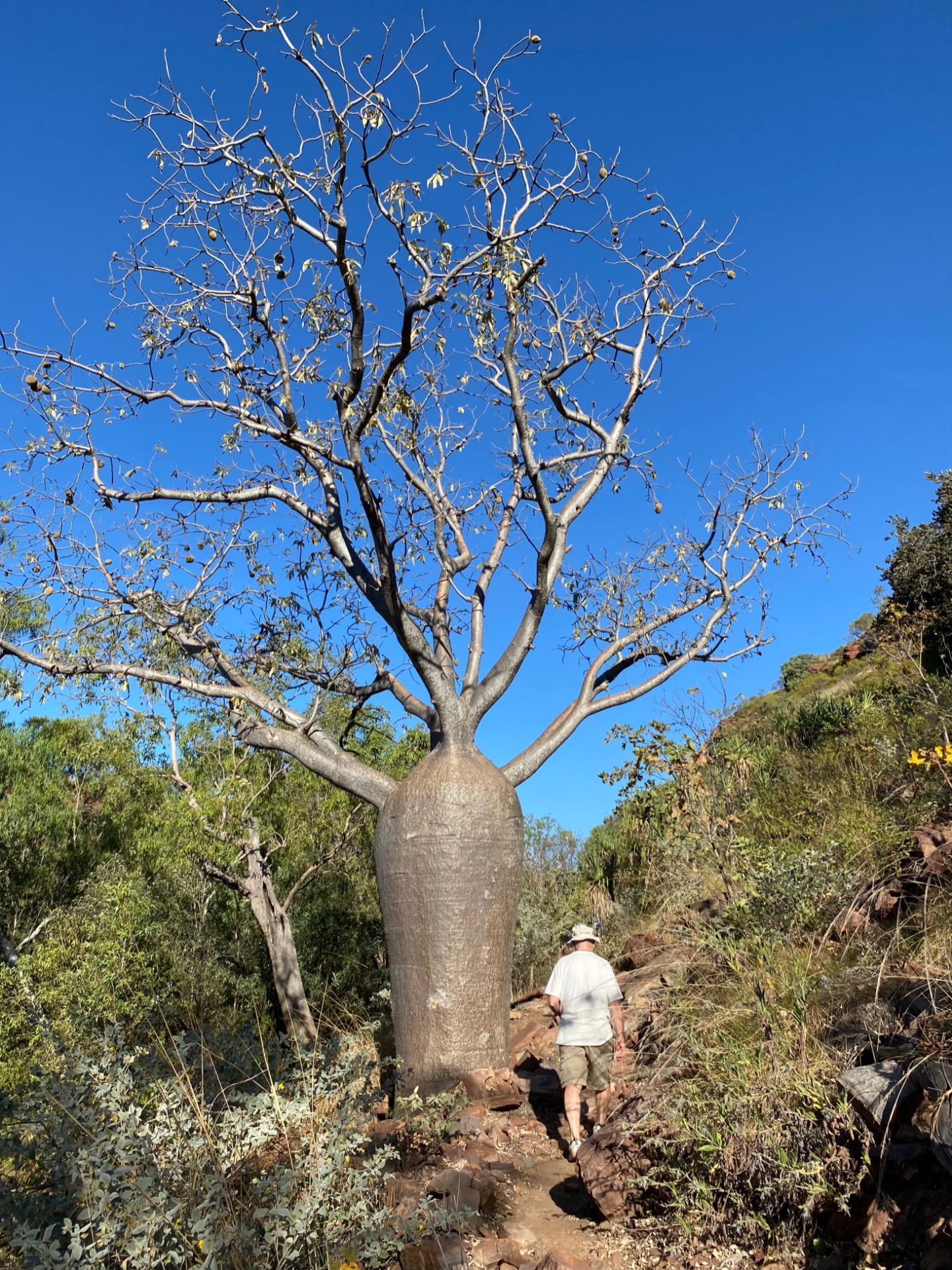
♦ The Botanic Gardens represented many different habitats, including rainforests, eucalyptus woodlands, Tiwi wet forests and Madagascar baobabs, with a guest appearance by our own beloved boab, Adansonia gregorii.