
On 22 February 2011, the clock at the old Post Office stopped at 12.51 pm.
Of the 185 victims of the Christchurch earthquake, 115 people died through the collapse of the CTV building, a catastrophe that continues to cause anguish for many in the city. During the Canterbury Earthquakes Royal Commission, the faulty building techniques that made this building particularly vulnerable were identified, but the engineer who was ultimately responsible for its faulty construction is now in his eighties and has never been charged.
The Christchurch earthquake destroyed not just the visible buildings, bridges and streets of the city, but also the invisible infrastructure that had provided drinking water, electricity and sewage facilities.

As a result, the inhabitants were advised to boil water until almost two months after the quake; they often had to queue for water provided by special tankers. Even those with running water were asked to avoid using their toilets, showers and washing machines in order to protect the shattered and fragile infrastructure that remained. Many people dug long drop toilets in their backyards and, in typical Kiwi style, adorned them with wisecracks and greenery. Their city, in one quaking, horrifying minute, had lost the simple luxuries of modern existence.
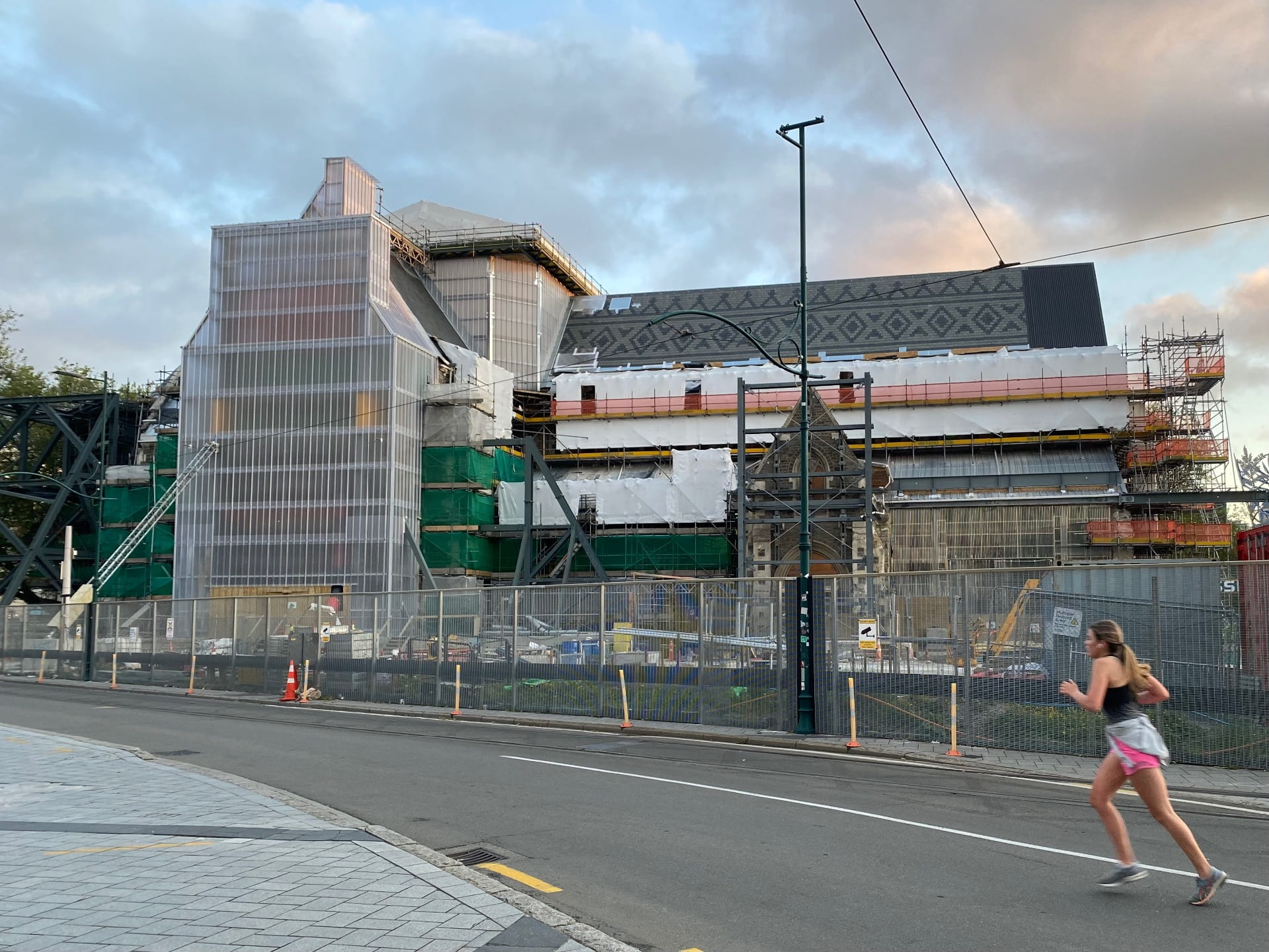
Despite the phenomenal scale of the rebuilding, many scars remain. The Christchurch Cathedral is still being held up by tons of steel; its completion will require well over 100 million dollars and another four years. There is a group of buildings that are still standing, awaiting either demolition or rebuilding in a manner sympathetic to their heritage listings. Some of these were originally referred to as the Dirty Thirty buildings; many have been the subject of legal wrangling and long delays due to insurance cases.

Below: A propped-up building and an empty plot
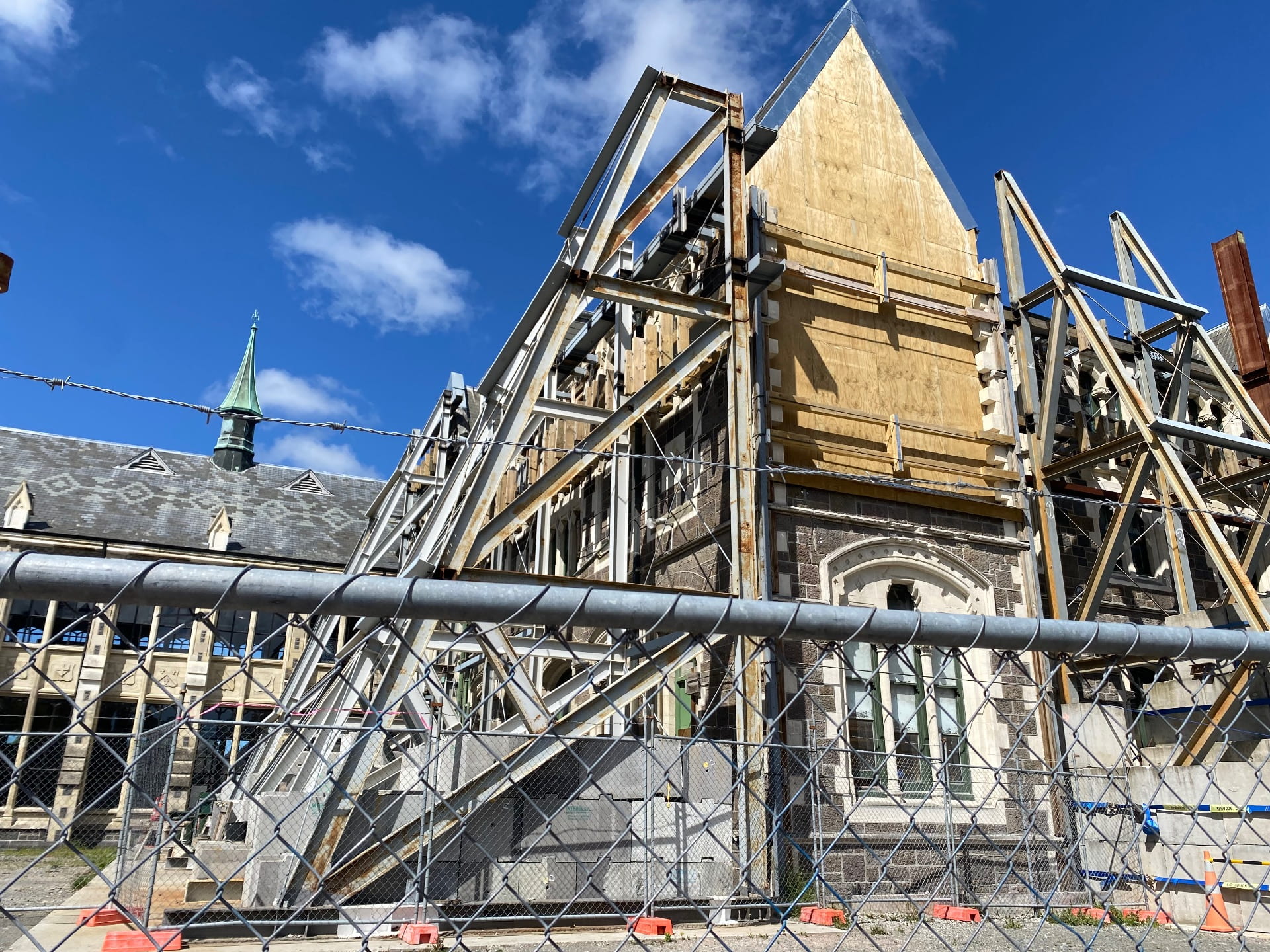

As we walked and rode trams around the inner city, we admired the bright, freshly designed buildings with their shining safety glass and foundations sunk 30 metres deep. Many of these new buildings are original and creatively conceived; they must surely be welcome sights for Christchurch’s weary inhabitants. But even now, we could also see ex-buildings that had morphed into car parks, holes that had remained holes, and ugly crumbling structures that no one could enter, propped up to protect passers-by.


From our mediocre but central hotel room, it was just a minute’s walk to Cathedral Junction, the atrium through which five trams rumble on their journey round the inner circle. They are all beautifully restored old rattlers constructed between 1903 and 1934. One comes from Sydney and at least one from Melbourne; I felt proud that Australia had supplied some of these wonderful old machines and rather jealous that our country doesn’t seem to value them to the same degree. The drivers were all charming and witty, and some were clearly well into retirement age, which meant that their comments on the city and its buildings were both wise and wryly humorous. The only problem was that we kept seeing places we wanted to visit and hopping off, so we couldn’t always give their commentary our lasting attention.

With the aid of our hop-on hop-off ticket, we visited the Riverside Market, the Botanic Gardens, the transitional “Cardboard Cathedral” and the brand new Tūranga Library. I am constantly impressed by the priority New Zealand policy-makers give to providing large, welcoming indoor spaces in the middle of major cities for people who want to learn, rest, read, sit quietly, connect to wifi, use computers or simply go to the toilet. What an utterly humane endeavour.
At the Tūranga Library:
 |
 |
 |
The Tūranga Library is an urban oasis with reading nooks surrounded by greenery, comfortable chairs placed invitingly for readers, sets of chess and checkers, and many other contrivances for the weary traveller, eager learner or any person who needs to rest and recuperate.
Our last stop was the Quake City Museum, where the story of Christchurch’s destruction and reinvention was told with all the warmth, humour and minute detail that a newcomer could wish for. It was there that we heard stories about the human impacts of the disaster: mothers searching for their children on that fateful day; teenagers helping their neighbours to dig their car out of the mud; a man who left the CTV building at 12.40, only to learn later that all his colleagues had perished. There was a set of interviews titled “Ten years later” and they highlighted the warmth, optimism and grief of the survivors:
I have less attachment to stuff now. – Annie
It made me realise that life is short. – Amanda
Mortality sets in… It’s like, oh bugger, let’s go for it. – Phil
When I think of Susan, she’ll always be fifty years of age. – Richard
Love from Rosi 🖤🤍
More Details
- Museum about the Earthquake and Its Aftermath: Quake City
- Getting around the Inner City: Christchurch Tramways
- Munted: Short Videos About the Earthquake and Its Aftermath
- The Story of Alan Reay: https://www.stuff.co.nz/the-press/9779087/Reay-and-the-CTV-building-collapse


